
Shockwave Therapy in Juneau: What It Is, What It Feels Like, and When to Consider It
Maybe your shoulder still hurts when you reach for a coat, or knee pain makes a familiar Juneau walk feel longer than it used to. If symptoms have lingered despite changes in activity or a course of rehabilitation, you may have heard about shockwave therapy. At Valley Chiropractic Clinic, we offer radial shockwave therapy and start with an examination to see whether it fits your symptoms, goals, and health history.
What is radial shockwave therapy?
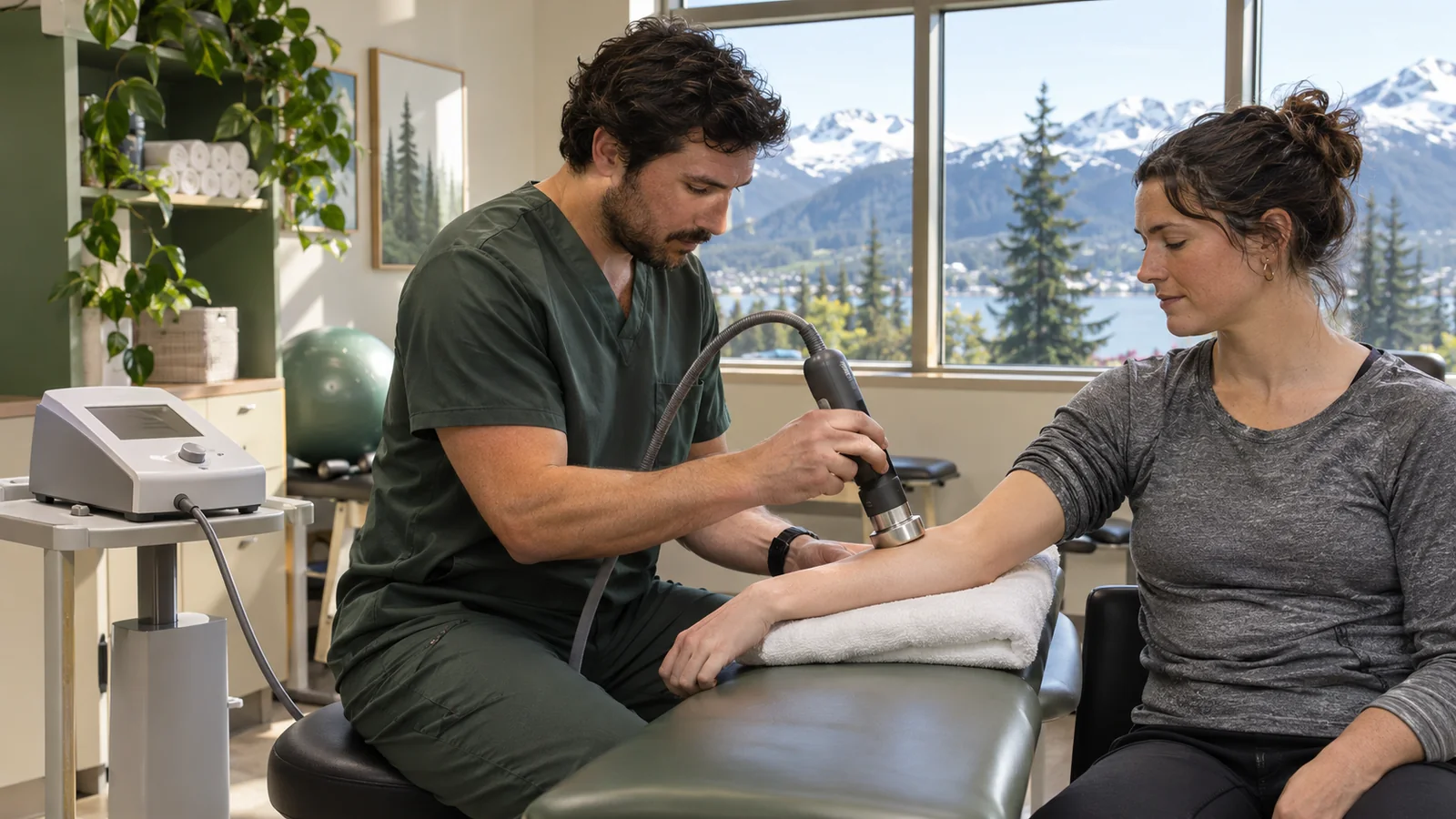
A clinician places a handheld applicator against the skin and delivers a series of mechanical pressure pulses to the area being evaluated for treatment. The word “shockwave” can make the treatment sound like an electrical shock. What you typically feel is repeated tapping or pulsing from the applicator. Clinics and researchers often use the name extracorporeal shockwave therapy, or ESWT. “Extracorporeal” means the device works from outside the body.
When it may be worth considering
Shockwave is studied for some persistent tendon complaints and for certain other musculoskeletal conditions. A randomized trial in knee osteoarthritis found short-term changes in pain and function with radial treatment. Shoulder research is more mixed, including for calcium deposits in rotator cuff tendons. Back pain studies cover different patient groups and devices, so an examination matters before deciding whether a soft-tissue approach makes sense. Our chiropractic and rehabilitation services page describes treatment options available at the clinic.
If you’re curious whether your symptoms match a condition the clinic can evaluate, start with an appointment to review what’s been tried and what you’d like to get back to doing.
New to Valley Chiropractic Clinic? Choose New Chiropractic Exam in Jane.
What a treatment session feels like
If radial treatment is appropriate, the clinician identifies the area, applies contact gel, and positions the applicator. Expect rhythmic tapping. A tender spot may feel more sensitive than tissue nearby. Tell the clinician what you feel so they can adjust or pause treatment. Temporary soreness, redness, or bruising can occur. Ask what to expect after your visit and whom to contact if symptoms are more intense or last longer than expected.
Share your medicines, recent injections or surgery, and any history of an injury to the area. Tell us if you are pregnant, take a blood thinner, have a bleeding disorder, or have an infection or suspected tumor near the area. These details may change whether treatment is appropriate. Keep taking prescribed medication as directed and bring your questions to the visit.
Start with the activity you want to get back to
At Valley Chiropractic Clinic, Where Structure Meets Function, a consultation starts with your story. What movements hurt? What can you do now, and what would you like to do more comfortably? The exam may look at motion, strength, and how you use the area during a task. Depending on the findings, a plan may include rehabilitation, appropriate chiropractic care, a change in how you build up activity, or referral for further evaluation. If you try radial shockwave, agree on a meaningful measure of progress and a point to reassess it, such as whether you can climb stairs or reach a shelf more comfortably.
If you’d like to explore your options in Juneau, bring one or two goals to your exam. That gives you and your clinician something concrete to work toward.
New patients should choose New Chiropractic Exam. Current patients can contact the clinic for help selecting a visit.
References & Further Reading
Radial shockwave trial for knee osteoarthritis
NICE guidance on shockwave therapy for calcific shoulder tendinopathy
NHS patient information on shockwave therapy and precautions