
Five Ways to Avoid Slips and Falls on Juneau’s Icy Sidewalks
A sidewalk that looked clear in the afternoon can be slick by the time you head home. In Juneau, a stretch of rain followed by freezing temperatures can leave a thin layer of ice on paths, parking lots, ramps, and steps. A few changes in how you plan and move can reduce your chances of slipping. Start before you step out the door, especially when daylight is limited.
1. Choose footwear with grip
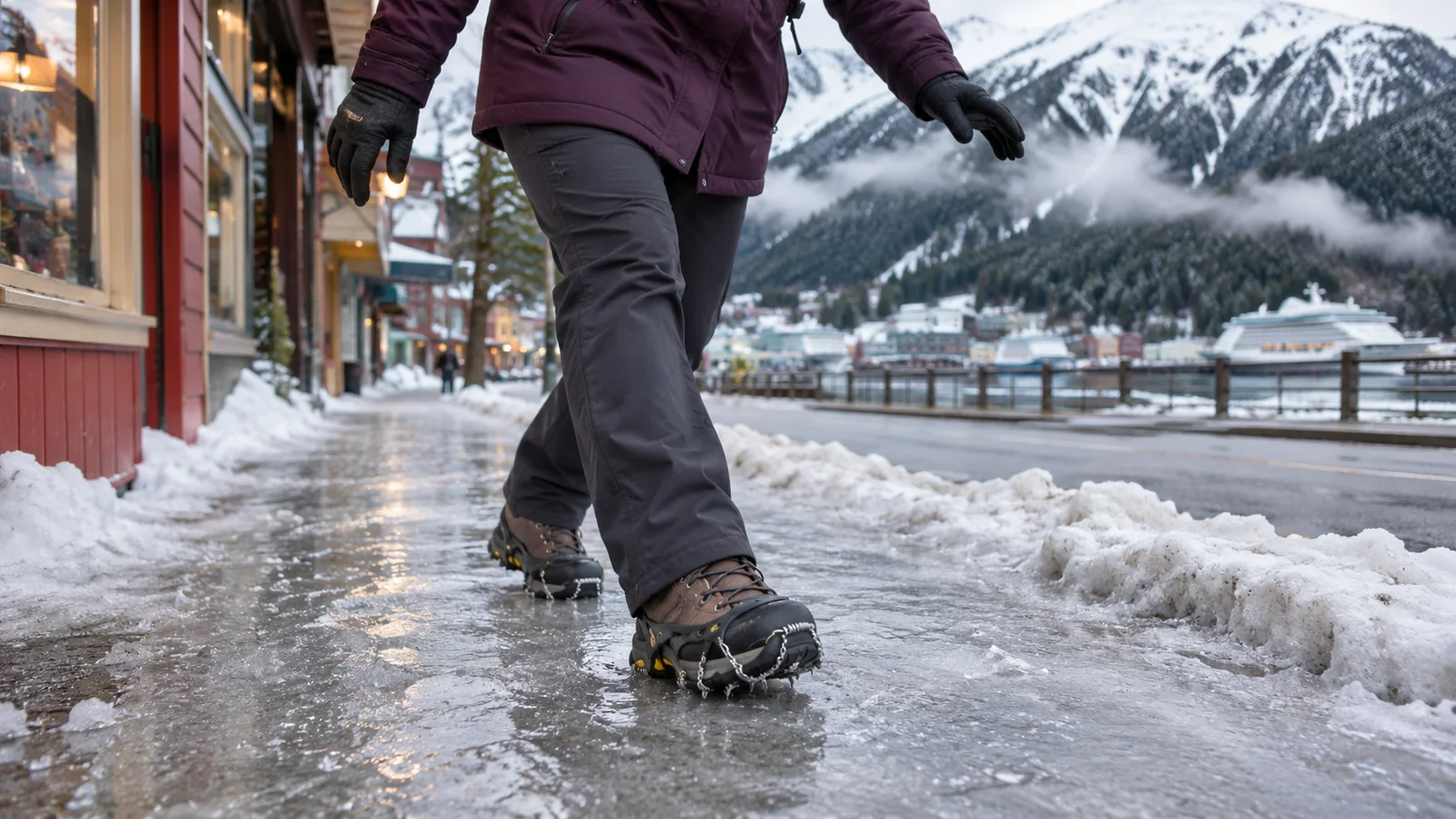
Look for a winter boot that fits securely around your foot and has a textured sole. Removable traction devices can help on some icy surfaces. Check the fit before leaving home so the device stays in place as you walk. Follow the manufacturer’s guidance about removing it before stepping onto tile or another smooth indoor floor. Allow extra time at the entrance so you can remove the devices while seated if needed.
2. Shorten your steps and slow down
Take small steps across slick stretches and slow down before you turn or step down from a curb. Keep your hands available so you can use a railing or steady yourself. Put your phone away until you reach a clear spot. If you need to carry several things, consider a backpack that leaves both hands free or make a second trip. Give yourself time to pause and look at the surface before putting your full weight on it.
3. Pick the route with the best footing
Favor cleared, treated paths and well-lit entrances, even if it adds a few minutes. Watch for shaded spots, areas beneath downspouts, and surfaces where vehicles have packed snow down. If a stretch is glazed with ice and you have a safer option, change routes. On days when footing is especially poor, an indoor walk or a postponed errand may be the simplest choice.
4. Give transitions extra attention
Some of the trickiest spots are the first few steps out of a car, a sloped driveway, or the wet floor just inside a building. Turn toward a step before descending and take hold of the rail when one is available. Look at the ground before getting out of the car and check whether you have stable footing before lifting a bag or shutting the door. Keep outdoor entry steps clear and well lit, and have loose mats secured so they stay flat.
5. Get help for recurring unsteadiness
If you have fallen recently, feel dizzy on your feet, or are changing how you walk because you fear falling, tell your healthcare provider. A fall risk assessment can address your vision, medication side effects, strength, balance, and whether a cane or walker would help. Ask for advice about the right device and how to use it in winter conditions. If you fall and suspect a serious injury, seek urgent help rather than trying to walk it off.
Before your next winter outing
Check the route, choose shoes for the surface, and budget a few extra minutes. If discomfort or changes in mobility are affecting how you walk, you can contact Valley Chiropractic Clinic to discuss an evaluation.
References & Further Reading
U.S. Air Force Safety Center guidance on slips and falls on ice